1. Introduction
For B2B clients (including project contractors, facility managers, and enterprise procurement teams), selecting a professional LED display requires a clear understanding of core technical parameters. These parameters directly determine the display effect, service life, and operational cost of the product. This document will detail the key technical indicators of LED displays and provide practical selection guidelines to help clients make informed decisions for their specific project scenarios.
2. Core Technical Parameters Explained
2.1 Pixel Pitch
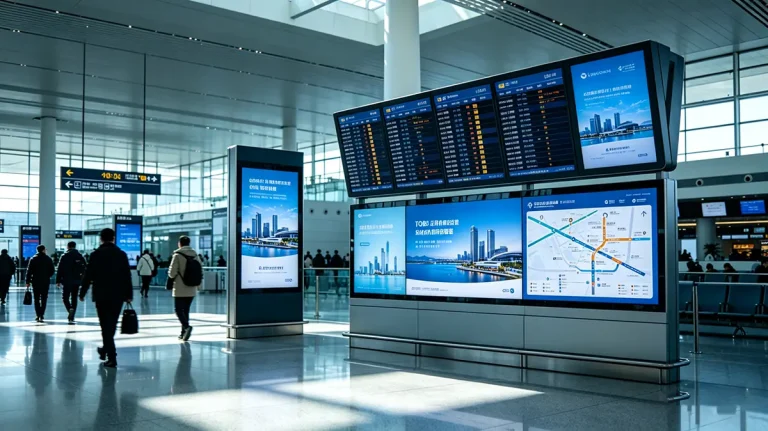
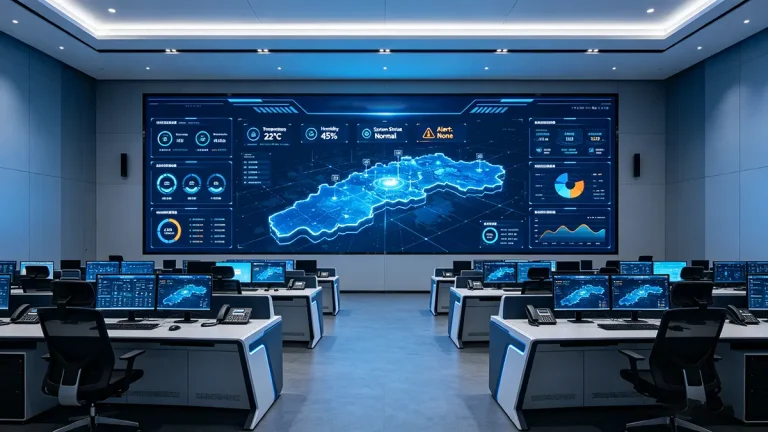
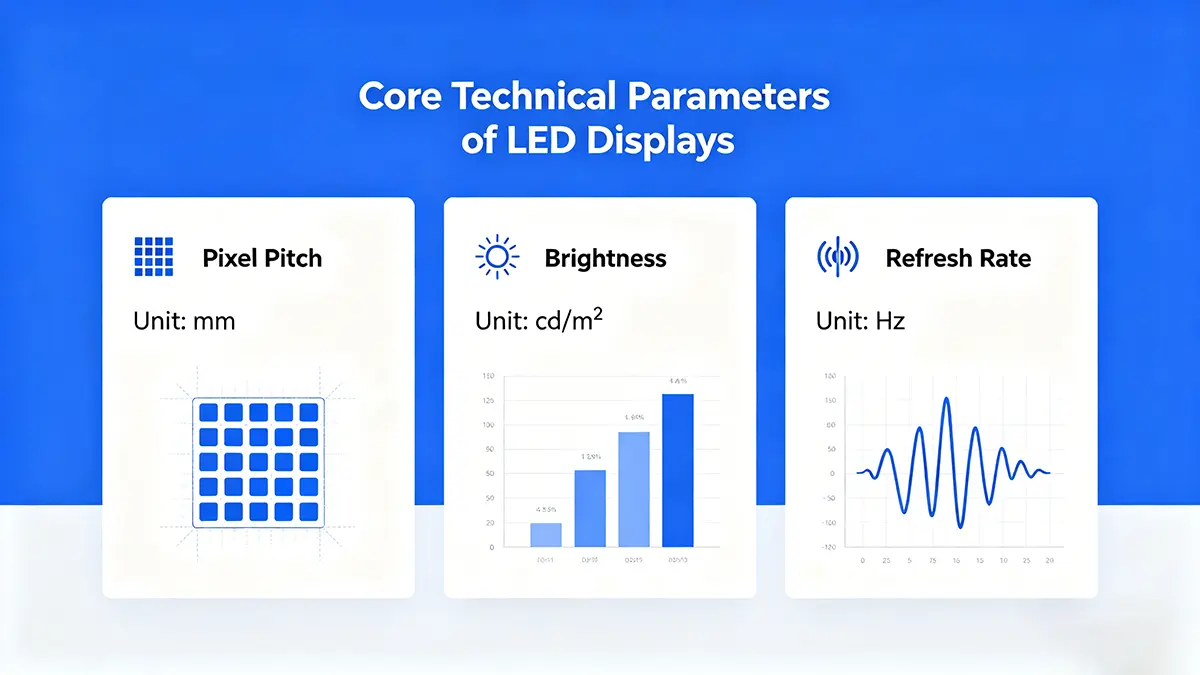
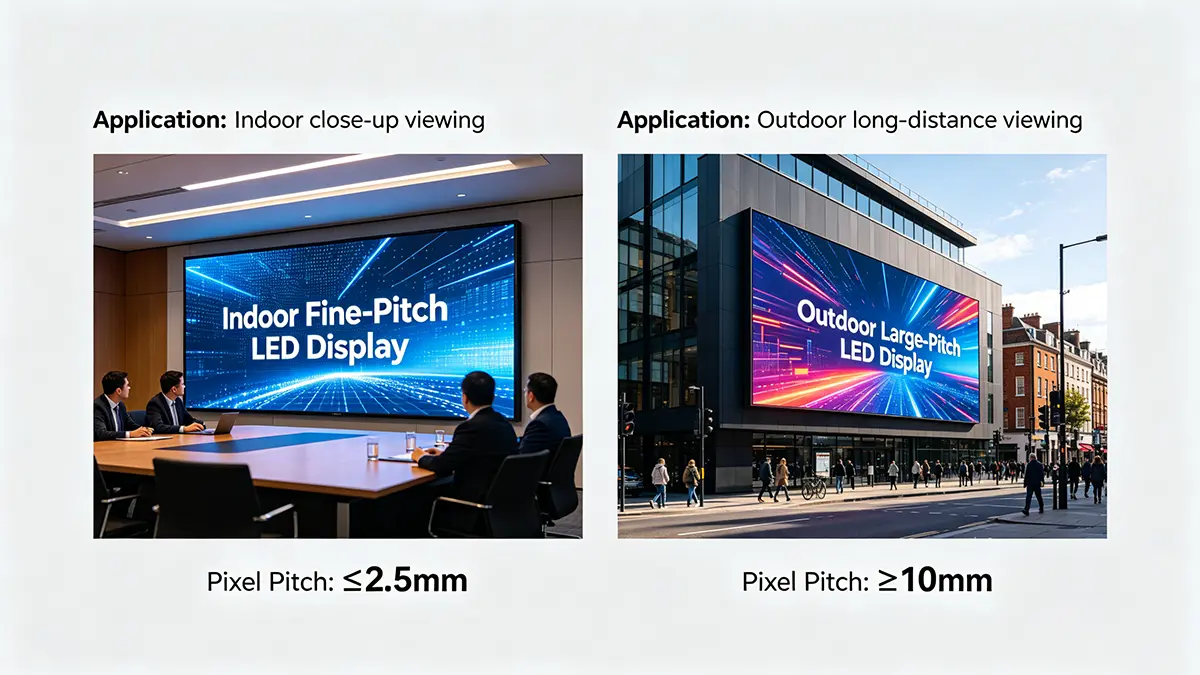
Pixel pitch refers to the distance between the centers of two adjacent LED pixels (measured in millimeters, mm). It is a key factor affecting display resolution and viewing distance: the smaller the pixel pitch, the higher the resolution, and the shorter the suitable viewing distance. For indoor scenarios (e.g., conference rooms, command centers), fine-pitch LED displays (P1.2-P2.5) are recommended to ensure clear image quality at close range. For outdoor scenarios (e.g., building facades, stadiums), larger pixel pitches (P3-P10) are more suitable, as they balance display effect and cost while adapting to long-distance viewing.
2.2 Brightness & Contrast Ratio
Brightness (measured in nits) determines the visibility of the LED display in different light environments. Indoor displays typically require 300-800 nits, while outdoor displays need 1500-5000 nits to resist sunlight and ensure clear visibility. Contrast ratio (the ratio of the brightest white to the darkest black) affects image layering and clarity; a ratio of 1000:1 or higher is recommended for most commercial scenarios to present vivid and detailed visual content.
2.3 Refresh Rate & Gray Scale
Refresh rate (measured in Hz) refers to the number of times the screen refreshes per second. A higher refresh rate (≥60Hz) ensures smooth dynamic images without flicker, which is critical for scenarios such as live broadcasts, video playback, and real-time data display. Gray scale (usually 8-bit to 16-bit) determines the color gradient effect; 12-bit or higher gray scale can present more delicate color transitions, making the image more realistic.
2.4 Service Life & Reliability
The service life of LED displays is usually measured by the time when the brightness decays to 50% of the initial value (known as L50). High-quality LED displays have an L50 service life of 50,000 hours or more, which means stable operation for 5-8 years under normal use. Additionally, features such as waterproof (IP65 for outdoor), dustproof, and high-temperature resistance improve the reliability of the display in complex environments.
3. Practical Selection Guidelines
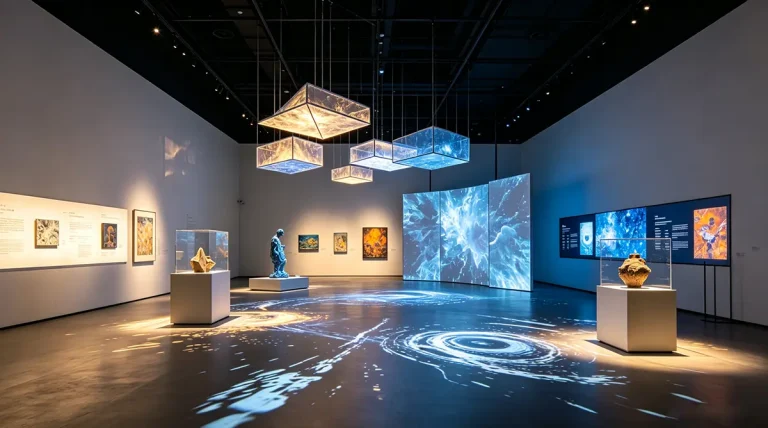
• Indoor Scenarios (Conference Rooms, Museums): Prioritize fine-pitch (P1.2-P2.5), medium brightness (300-500 nits), high contrast ratio (≥1500:1), and low blue light design for long-time viewing.
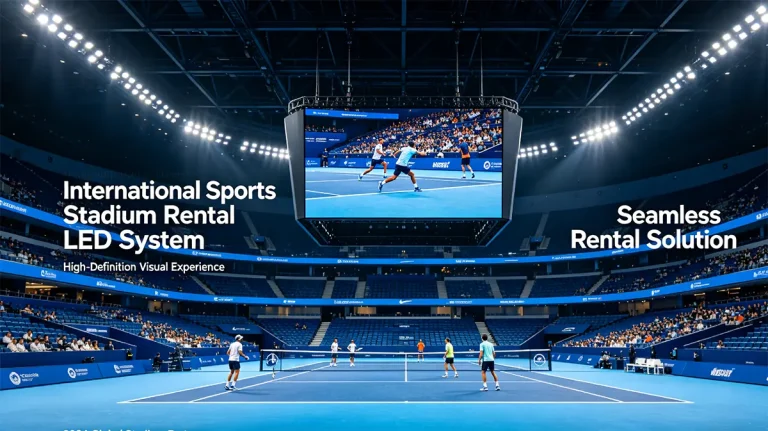
• Outdoor Scenarios (Facades, Stadiums): Choose large pixel pitch (P3-P10), high brightness (≥2000 nits), IP65+ waterproof rating, and anti-glare design to adapt to harsh weather conditions.
• Rental Scenarios (Events, Performances): Focus on lightweight, modular design, quick installation/disassembly, and high refresh rate (≥120Hz) to meet temporary use needs.
4. Conclusion
Understanding core technical parameters and matching them with specific project scenarios is the key to selecting a high-performance LED display. By focusing on pixel pitch, brightness, refresh rate, and reliability, B2B clients can choose a solution that balances performance, cost, and long-term value. For personalized project needs, professional LED manufacturers can provide customized technical support and scheme design.